On this page
- The four causes: door or gasket, chute flap, a setting colder than 0 °F, blocked airflow. 1
- Electrolux recommends 0 °F in the freezer and 37 °F in the refrigerator when the unit sits in a kitchen. 3
- A side-by-side door is raised with a 7/16 inch wrench; a French door uses a 6 mm Allen wrench at the lower hinge. 2
- The high-temperature alarm trips at 26 °F in the freezer. 4
- The article says how to prevent frost, not how to clear existing frost. 1
Why does frost build up in an Electrolux freezer?#
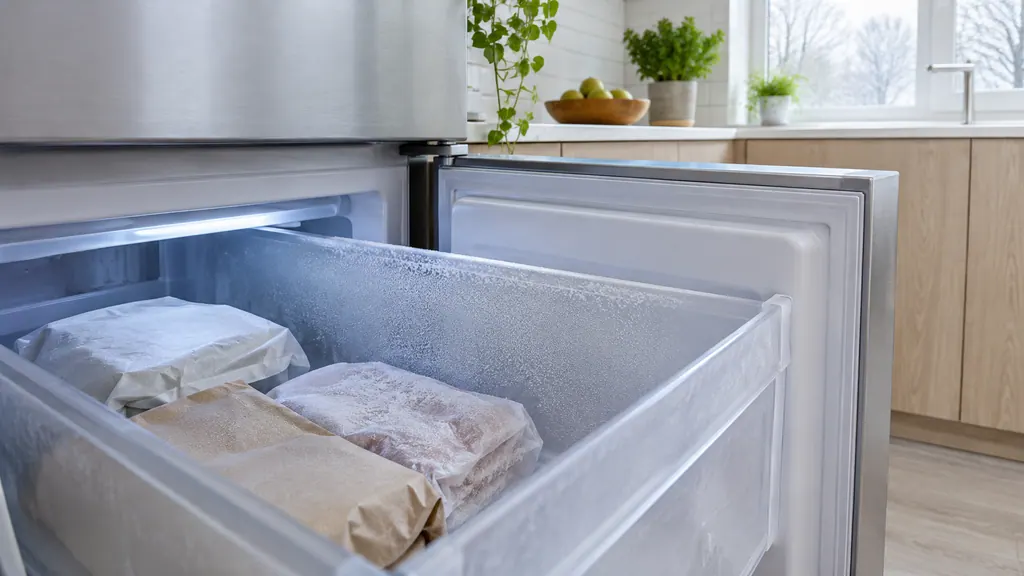
Electrolux explains frost as moisture from warm air that turns to ice crystals once it meets air under 32 °F. It names four causes: the door seal, the chute flap, a setting colder than it needs to be and blocked airflow. 1
The first point to take from that is that the warm air has to come from somewhere. Every cause on the list is a way for warm, moist air to get in or for the freezer to be colder than it needs to be.
| Cause listed by the Owner Center | What it means |
|---|---|
| A warped gasket or door | The door cannot seal fully when it shuts 1 |
| The chute flap held ajar | Stray ice can keep the flap from closing 1 |
| A setting that is far too cold | Anything colder than 0 °F can over-freeze food 1 |
| Poor airflow from where food sits | Packages cover the air paths or stand in the direct stream of cold air 1 |
Where on the freezer should I look first?#
Look where each cause would show. The article lists the causes without a map, so the pairing below is ours: frost along the door edge points at the seal, around the chute at the flap, and on food in front of a vent at the airflow. 1
- Along the door edge or on the door's inner face. Check the seal first. The article's fixes are to shut the door fully with nothing in the way, and to confirm the gasket seals well. 1
- Around the ice chute. On a model with a dispenser, make sure the chute is completely closed. The article notes that ice can get stuck and stop it from closing. 1
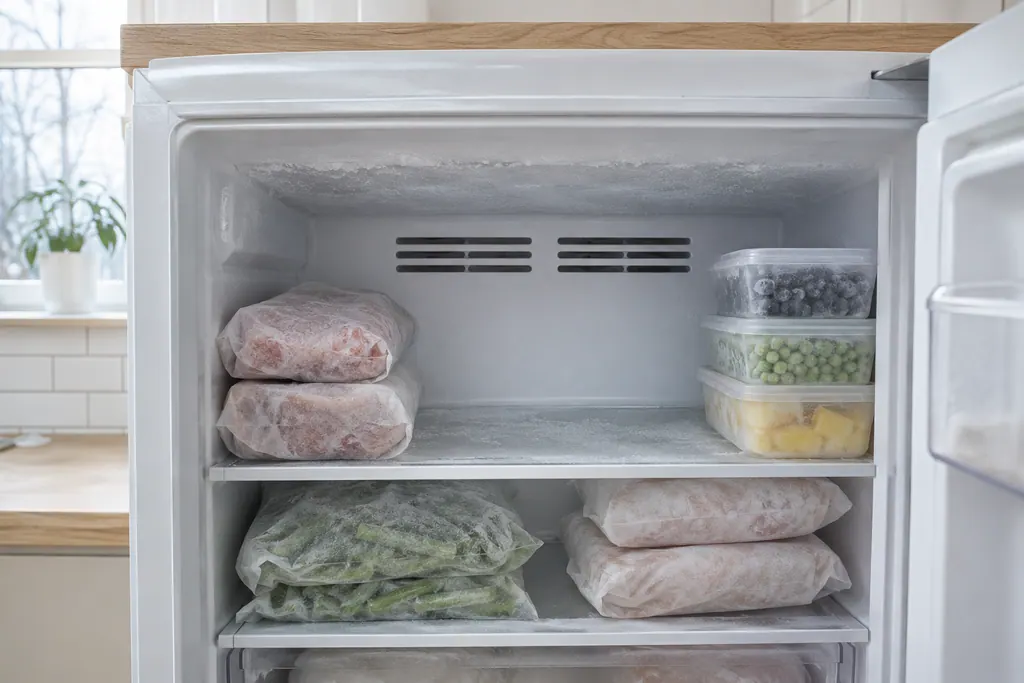
- On packages that sit in front of a vent, or on the vents. Check the vents for proper airflow, because items may block them. 1
- Everywhere, with food freezing harder than it should. Check the temperature setting. Anything colder than 0 °F can over-freeze food and cause frost. 1
The article adds that a product placed in a direct line of the cold air will eventually collect frost. 1 If one package is frosted and its neighbors are not, move it out of the airstream first.
Note the pattern before you change anything, and take a photo. Where the frost sits is the strongest clue we have on the first visit.
How do I check the door and the gasket?#
Close the door and make sure nothing holds it open: a package, a tray or a drawer sticking out. Then feel around the entire gasket for a stretch that is warped, torn or clear of the cabinet. 1
- 1
- 2
- 3
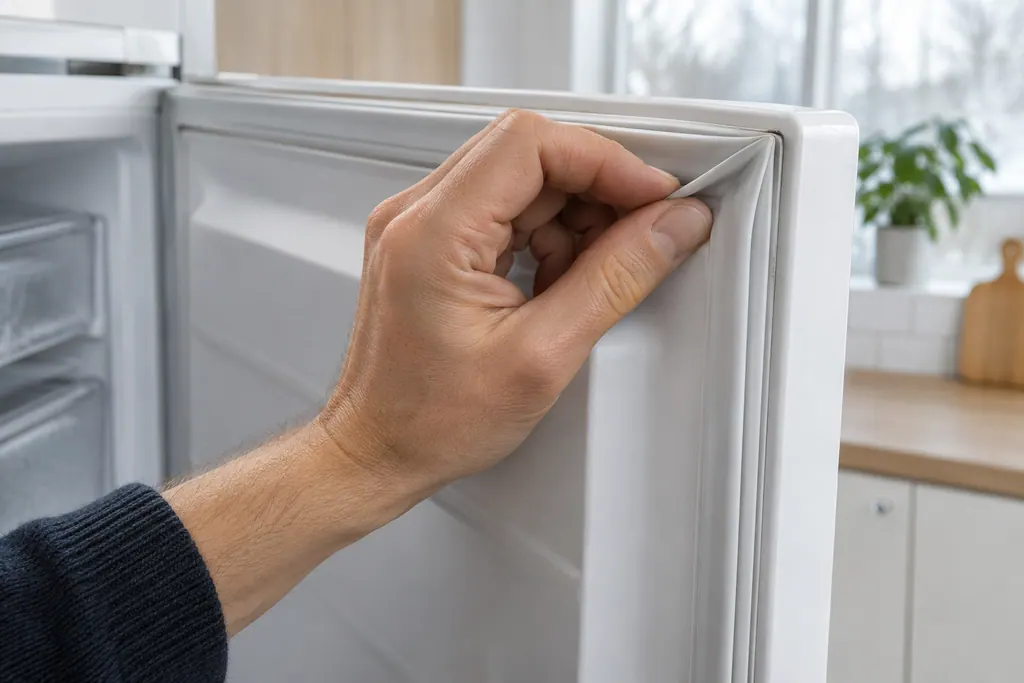
Warm air getting past a poor seal is also what the high-temperature alarm is about. The Owner Center says the alarm is usually caused by a door not closed all the way or left open for an extended period, and it also lists a gasket that does not seal well as a possible cause. 34
What about a jammed ice chute?#
A chute that will not close can be an ice problem. The Owner Center's alarm article lists DI SP for an ice cube or cubes jammed in the ice chute for an extended period, and says to open the door, look in the chute and remove any blockage. 4
That is the same chute the frost article tells you to check. If DI SP has shown, clear the chute and make sure the flap closes fully afterward. The refrigerator repair page covers ice and water problems more widely.
What if the doors are not level?#
A door that sits lower than its neighbor can stop the seal from closing all around. The Owner Center has a separate article, How to align doors, with steps for side-by-side and French-door models. 2
On a side-by-side, remove the set screw that locks the door height first, because the door cannot be adjusted without it. If the refrigerator door is lower than the freezer door, raise it by turning the adjustment screw counterclockwise with a 7/16 inch wrench. If the freezer door is lower, do the same on that door. 2
After leveling, check that the door stop contacts the lower hinge and that the upper edge of the door clears the upper hinge over its whole swing. Then refit the set screw and the toe grille. 2
On a French door model, open the freezer drawer to reach the hinges of the fresh food doors. Put the 6 mm Allen wrench that came with the unit into the shaft of the lower hinge. To lower a door, turn the screw counterclockwise as you look at it from below; to raise it, turn clockwise. 2
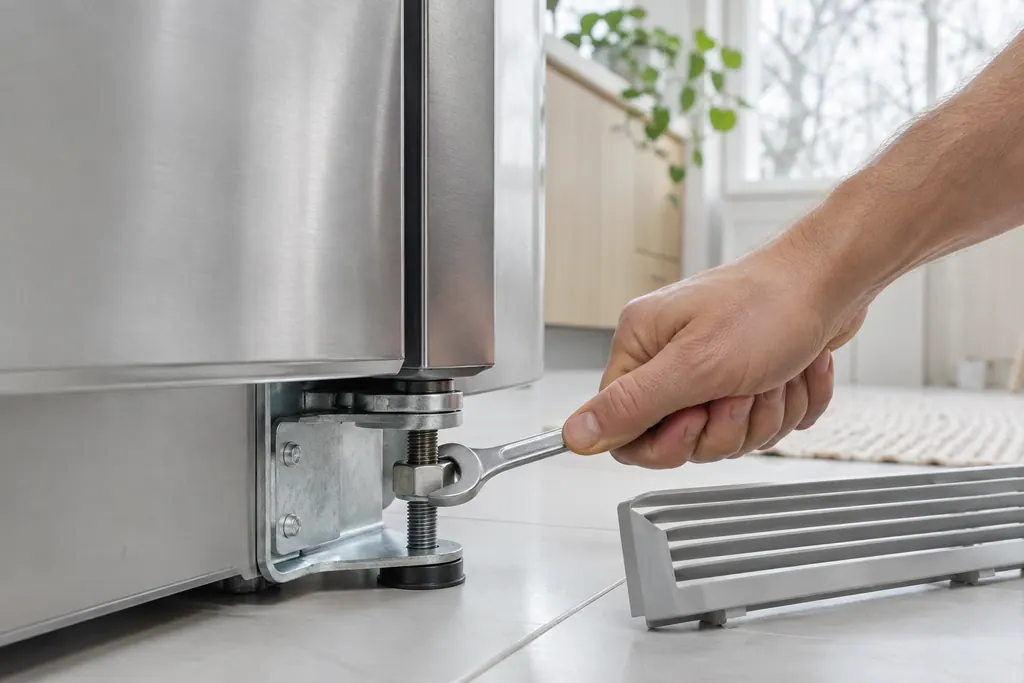
The article does not say how much to turn. Make small adjustments and check the gap along the top and bottom of the door after each one.
What temperature should the freezer be at?#
Zero for the freezer and 37 for the refrigerator, in °F. The Owner Center gives those as the recommended settings for a unit installed in a kitchen, and the frost article lists a freezer running below zero as a cause of frost. 13
It can look sensible to turn the freezer colder when frost appears. The article says the opposite: extremely low temperatures can over-freeze the contents and cause frost. 1 Bring the freezer back to 0 °F and give it time before you judge.
The high-temperature alarm trips once the freezer hits 26 °F, or the refrigerator 55 °F. 4 After a power cut, that alarm may also come on while the unit is still recovering to a safe temperature. 4
What should I do after a power cut?#
The alarm article says that after a power failure the unit shows PF, and that once power returns you press Alarm Reset to acknowledge it. The refrigerator then resumes normal operation. 4
If the power was out a long time, the high-temperature alarm may also come on until the unit has reached a safe operating temperature. 4 Keep the doors shut while it recovers, because every opening lets in the warm, moist air that frost needs.
Does the temperature of the room matter?#
The high-temperature article gives its recommended settings for a unit installed in a kitchen. 3 It does not say how a garage or basement location changes things, so if your freezer lives outside the kitchen, mention it on the call.
Does frost mean something is broken?#
The sources do not say. They give four causes that an owner can check and, if those do not resolve it, they send you to service. A unit installed less than a month ago goes back to the installer first, according to the Owner Center. 1
They also do not describe how to remove frost that has already formed, so follow your Use & Care guide for that. What we can tell you is that frost which returns after every owner check has been done is a reason to have the freezer looked at.
Have the model number ready, with where the frost forms and what you have already checked. Our freezer repair page and refrigerator repair page list what a visit covers.
Sources#
- Refrigerators / Freezer - Frost Build Up (KB 1918348)Electrolux / Owner Center knowledge base (owner.electrolux.com) · Knowledge-base page text saved 10.11.2026; no edition is printed on the page · article text
- Refrigerators - How to align doors (KB 1898514)Electrolux / Owner Center knowledge base (owner.electrolux.com) · Knowledge-base page text saved 10.11.2026; no edition is printed on the page · article text
- Refrigerator Error Code H or HI - High Temperature (KB 1917064)Electrolux / Owner Center knowledge base (owner.electrolux.com) · Knowledge-base page text saved 10.11.2026; no edition is printed on the page · article text
- What do the alarms or error messages mean on my French-Door refrigerator? (KB 1853035)Electrolux / Owner Center knowledge base (owner.electrolux.com) · Knowledge-base page text saved 10.11.2026; no edition is printed on the page · article text