On this page
- E61 is the relay, E63 and E64 are the heater and its wiring, E65 and E66 are temperature safety devices. 1
- E65 counts high-limit trips and sends the technician to the exhaust vent after the limiter check. 1
- A gas dryer adds the inlet thermal limiter to the E66 check; an electric one adds it to E65. 1
- The lint screen needs cleaning around every load and the outdoor exhaust about every 18 months. 2
- A dryer with no heat and no code may only need a breaker or a different cycle. 3
What is the difference between E61, E63, E64, E65 and E66?#
E61 is a heater relay failure, E63 a heater shorting to the cabinet, E64 an open heater circuit, E65 a high-limit thermostat that has tripped too many times and E66 an open thermal limiter. Each row tests a different part. 1
On a quick read they all look like "the dryer is not heating", and that is why owners mix them up. The sheet treats them as five separate problems with five separate meter checks. Only the last two are about temperature, and only E65 mentions the vent.
| Code | What the sheet calls it | Possible conditions | What the technician checks first |
|---|---|---|---|
| E61 | Heater relay failure | Relay stuck open or closed; wiring defective | Short circuit across the heater relays, or open circuit to them 1 |
| E63 | Heater to earth ground | Heating element or wiring defective | Heater coils and connections for shorts to the cabinet 1 |
| E64 | Heater open circuit | Heating element or wiring defective | Heater coils and connections for open circuits 1 |
| E65 | High-limit thermostat trip count too high | High vent restriction; thermostat defective; inlet thermal limiter tripped (electric only) | Inlet thermal limiter continuity, then the exhaust vent, then the thermostat 1 |
| E66 | Thermal limiter open circuit | Outlet limiter tripped; inlet limiter tripped (gas only); wiring | Outlet thermal limiter continuity, plus the inlet one on gas 1 |
The single row beside them, E67, is a heaters sensing failure, and the sheet's only remedy is to replace the electronic control board and retest. 1
What does each heat part do?#
The relay switches the heater on and off. The heater makes the heat. The thermal limiter and the high-limit thermostat are the temperature protection that cuts power when the dryer gets too hot. Each has a glossary entry. 1
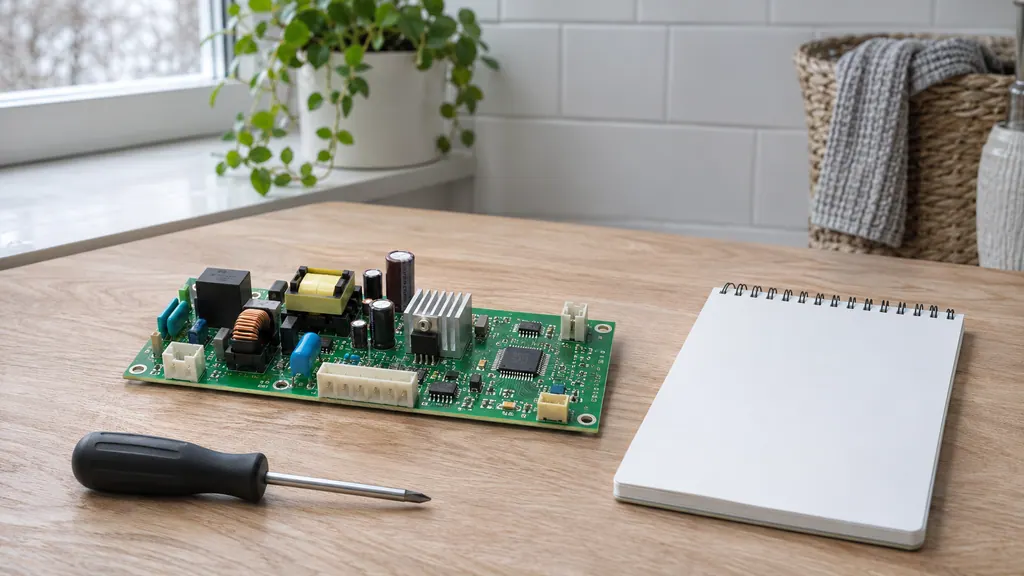
The heater relay is a switch on the control board, and E61 means it is stuck open or stuck closed or its wiring is bad. The sheet's checks are a short circuit across the relays and, with the cycle stopped, line voltage showing up at a relay output. If the wiring tests fine, the last step is to replace the electronic control board and retest. 1
The thermal limiter and the high-limit thermostat are different devices with different codes. E66 reports a limiter that has opened. E65 reports a thermostat that has opened and closed too many times.
How do E63 and E64 differ?#
They are two ways a heater can go wrong. E64 is an open circuit: current cannot get through the coil or one of its connections. E63 is a short to ground: current escapes to the cabinet. The sheet pairs both with "heating element or wiring defective". 1
The remedies read alike. For E64, check the coils and connections for open circuits. For E63, check them for short circuits to the cabinet. Either way the sheet ends with replacing the heater and/or wiring and retesting. 1 A short to the cabinet is a reason not to touch the dryer's metal while it is plugged in.
Which heat code can the vent change?#
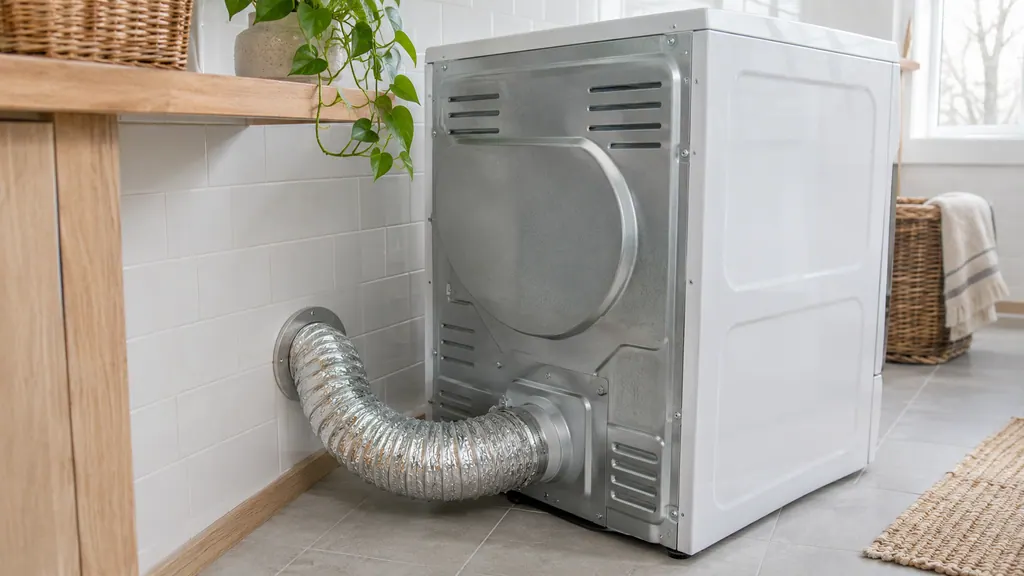
Only E65. Its remedy tells the technician to check the exhaust vent for air blockages once the inlet thermal limiter tests fine on an electric model. A restricted vent holds heat in the dryer, and the limiter and thermostat are what notice. 1
The sheet does not tell the owner to clear the vent first, and neither do we: if a limiter has opened, there may be heat damage that someone has to look at. The sheet's wording is to check for evidence of a high temperature event and any resulting damage, and to replace the limiter only if no further damage is evident. 1
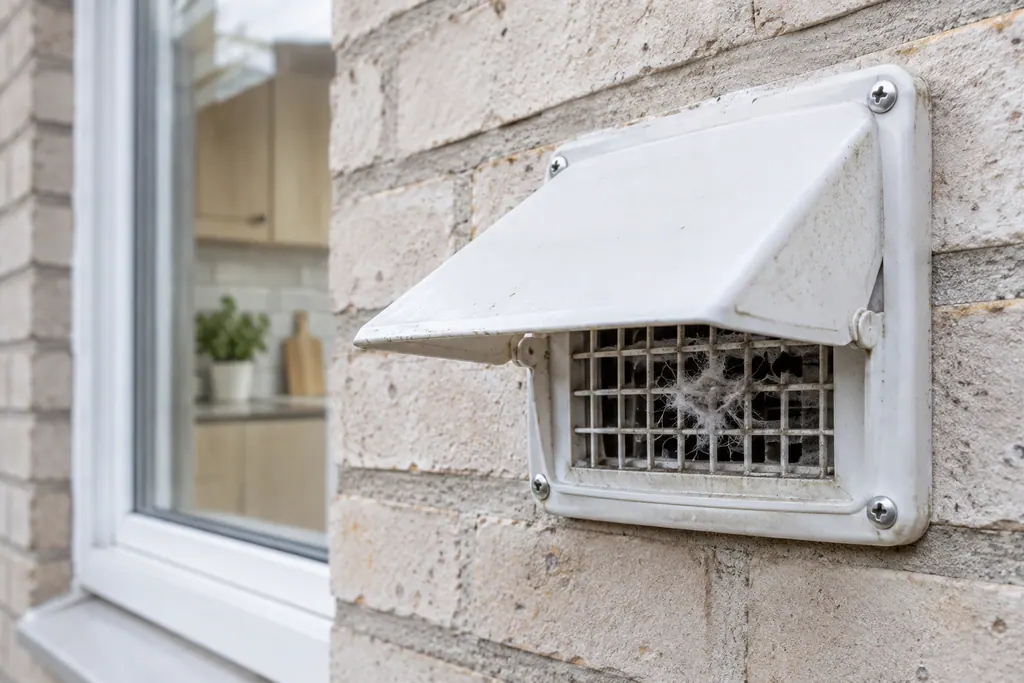
Still, a clean vent costs you nothing and it supports the repair. The Owner Center says to clean the lint screen before or after each load, and to inspect and clean the whole outdoor exhaust and venting every 18 months. 2
- 1
- 2
- 3
- 4
What does a trip count mean?#
The name of E65 matters. The control does not react to one trip of the high-limit thermostat. It counts them, and the code appears when the count is too high. 1
That is also why a dryer that has been drying slowly for weeks is worth a look at the vent. The Owner Center lists the exhaust duct, the hood and the surroundings among its checks for slow drying. 4
How do gas and electric dryers differ in these codes?#
The difference is the inlet thermal limiter. On an electric model the sheet checks it as part of E65. On a gas model it is added to the outlet limiter check in E66. The rest of the rows read the same for both. 1
Say which type you have when you call. We need to know the fuel, because the first meter checks are not the same. For a gas dryer, the Owner Center also lists the gas supply valve, the LP tank and enough clear space around the dryer for the burner to get air. 3
Could the dryer simply need a breaker or a different cycle?#
Yes, but only when no code showed. The Owner Center says an electric dryer has two house circuits or fuses, and if one is tripped or blown the drum may turn while the heater does not run. 3
It also names the cycle: Air Fluff or a no-heat temperature makes the dryer tumble without warmth. 3 And it says drying takes longer if the dryer sits on a 208-volt supply instead of 240. 4 A code on the display points away from these causes, because the control noticed a specific part.
For no-heat without a code, our dryer not heating page walks through the same checks in order.
What will the technician do, and what should I say?#
Expect meter checks, not guesses. For E61 the technician tests the relay outputs, for E63 and E64 the heater coils, for E65 and E66 the limiters, the vent and the thermostat. Say which code it was and whether the dryer runs on gas or electricity. 1
Most rows in this family end with the word "retest", so expect the technician to run the dryer after each replacement to confirm the code has gone. On E66 the sheet adds a second step before any part is replaced: look for evidence of a high temperature event and any damage it caused. 1
Add what you noticed: a hot smell, scorched laundry, a dryer that runs long, or a vent that has not been cleaned in years. That history decides whether we look at the vent run too. The pairing of codes is also useful: E65 and E66 together say the same thing from two angles.
For the other half of the Ceres chart, see the code recall and families guide.
If the dryer is still inside the manufacturer's warranty, the manufacturer handles the repair. The dryer repair page lists what an independent visit covers.
Sources#
- Dryer Tech Data Sheet, P/N 137265000B (1202)Electrolux (technician sheet; retailer-hosted copy) · P/N 137265000B (1202); Canadian SKU EIMED6CJIW; original file dated 2009 · p. 1 (Error Code Chart, E61 to E67)
- Dryers - How often do I need to clean my dryer or the lint screen/filter to optimize my drying performance? (KB 1847456)Electrolux / Owner Center knowledge base (owner.electrolux.com) · Knowledge-base page text saved 10.11.2026; no edition is printed on the page · article text
- My dryer is running, but does not seem to be heating. What should I do? (KB 1853007)Electrolux / Owner Center knowledge base (owner.electrolux.com) · Knowledge-base page text saved 10.11.2026; no edition is printed on the page · article text
- Dryer - Not Drying and Extended Drying Time (KB 1853008)Electrolux / Owner Center knowledge base (owner.electrolux.com) · Knowledge-base page text saved 10.11.2026; no edition is printed on the page · article text