Start from the symptom
Electrolux dryer noisy, rattling or shaking.
Most dryer noise has a simple source: coins or buckles in the drum, a loose pedestal, shipping bolts still in place or a dryer that is out of level. Electrolux also lists sounds that are normal, such as the chime at the end of a cycle.
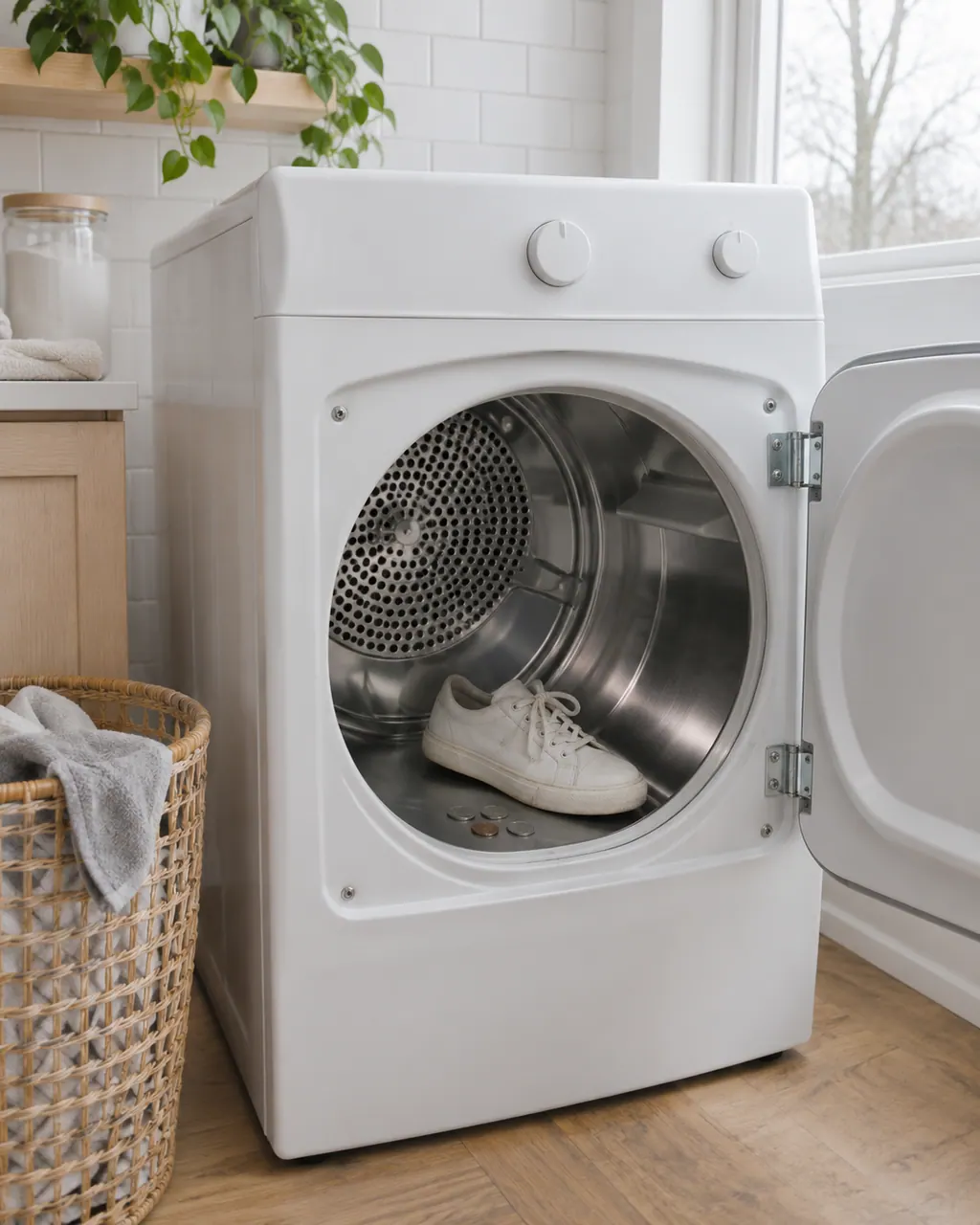
Start with safe observations.
Power the appliance down and pull the plug before any owner check. Beware of standing water and sharp debris. Never touch a wet plug or electrical area, take off service panels, or step beyond your model’s owner guide.
- 1
Decide whether the sound is normal
Electrolux calls the chime at the end of a cycle normal. The dryer can also chime now and then during Wrinkle Release when that option is chosen. Settle this first, so you do not chase a sound that belongs there.
- 2
Empty the pockets, then run it empty
For rattling or clanking, stop the dryer and look through the drum for coins or other loose objects. Then run a cycle with no laundry. If the sound disappears, it came from the clothes. If it stays, it comes from the dryer.
- 3
Fasten buckles and zippers
Belt buckles and other clothing fasteners can clank against the drum. Electrolux suggests fastening them or turning the garments inside out.
- 4
Check a pedestal
Clanking or squeaking is usually linked, per Electrolux, to a dryer on a pedestal that has loosened. If yours sits on one, check how firmly it is attached.
- 5
New dryer: bolts and level
For vibrating or walking, Electrolux asks you to confirm that every shipping bolt was removed and that the dryer is level, as the use and care manual describes.
- 6
Installed in the last 30 days
Electrolux tells owners of units installed within the past 30 days to go back to their installer first.
Systems a technician may investigate.
The linked parts are the ones Electrolux’s technician sheets name for this appliance. We confirm each against your model number once the diagnostic is done, and you approve any replacement first.
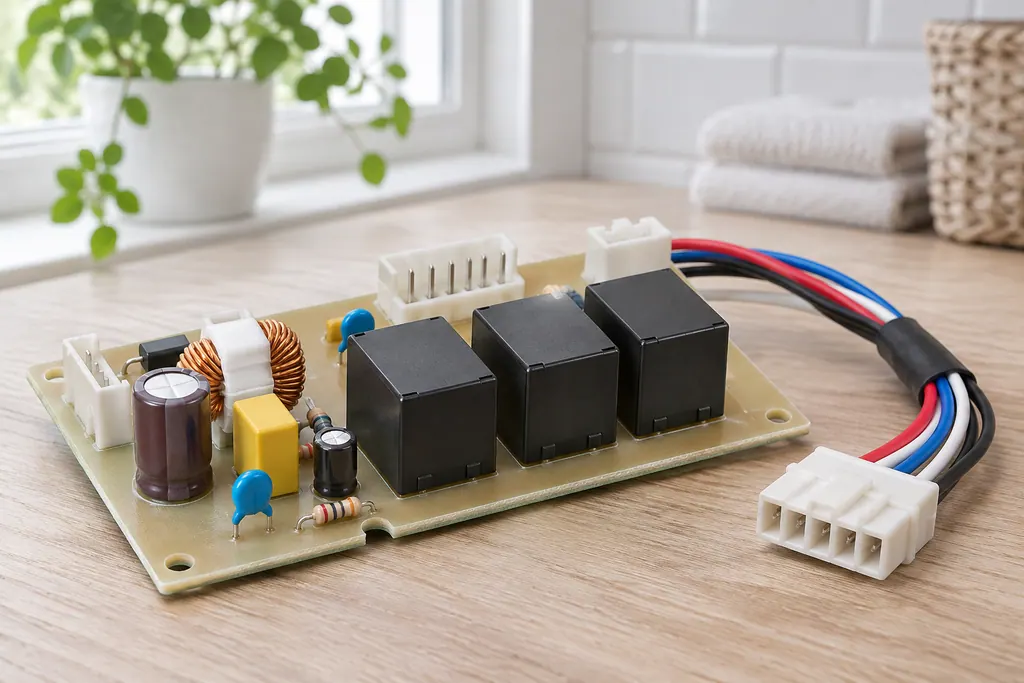
Dryer heater relay
A heater relay is the switch that sends power to the dryer’s heating element. Electrolux’s dryer sheet ties E61 to it: the relay stuck open or closed, or the wiring around it defective. A technician tests it with the cycle stopped.
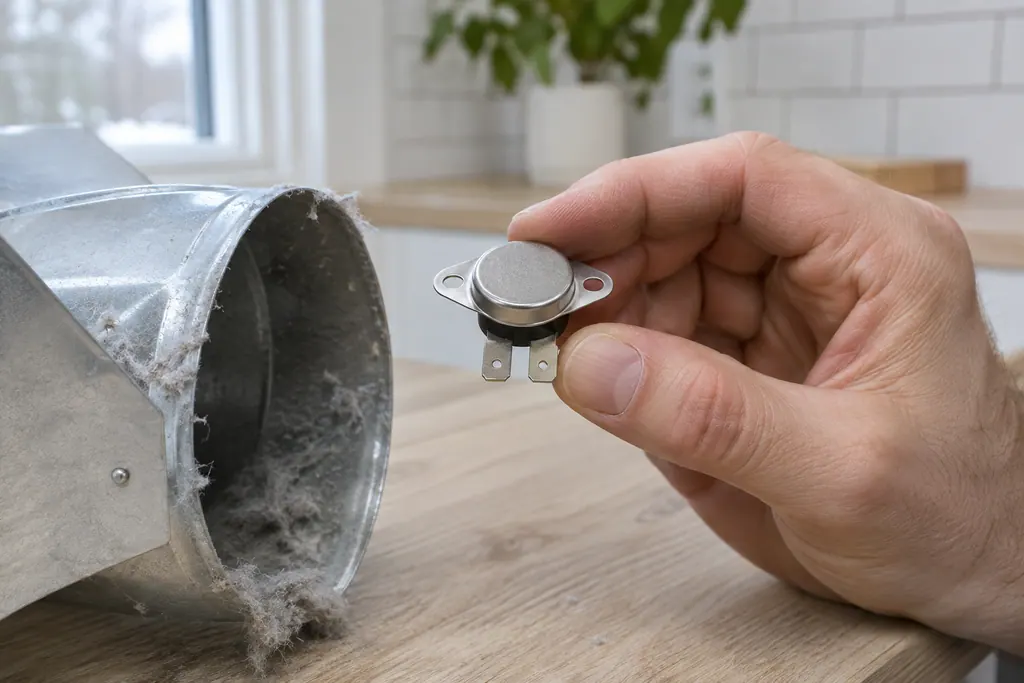
Dryer thermal limiter
The thermal limiter is a temperature safety part in the dryer’s heated air path. When it opens, the circuit stops. Electrolux’s dryer sheet names the outlet limiter (plus an inlet limiter on gas models) behind E66, and an inlet limiter on electric models behind E65.
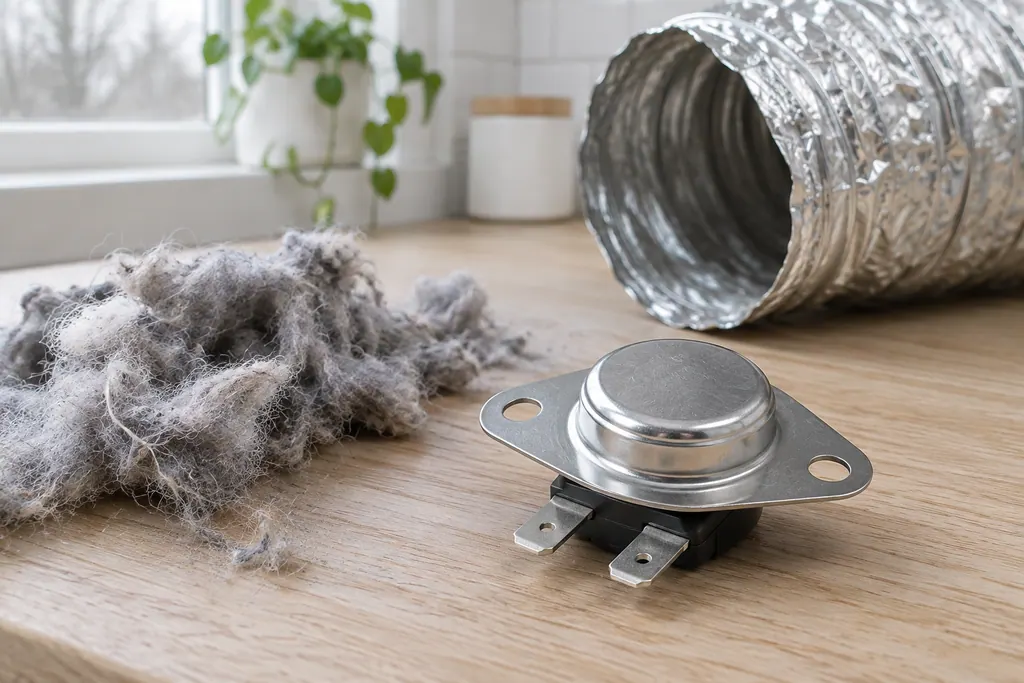
Dryer high-limit thermostat
The high-limit thermostat is a second temperature guard inside the dryer. Code E65 means the control has counted too many of its trips. Electrolux’s sheet blames a high vent restriction first, then the thermostat itself, then the inlet limiter on electric models.
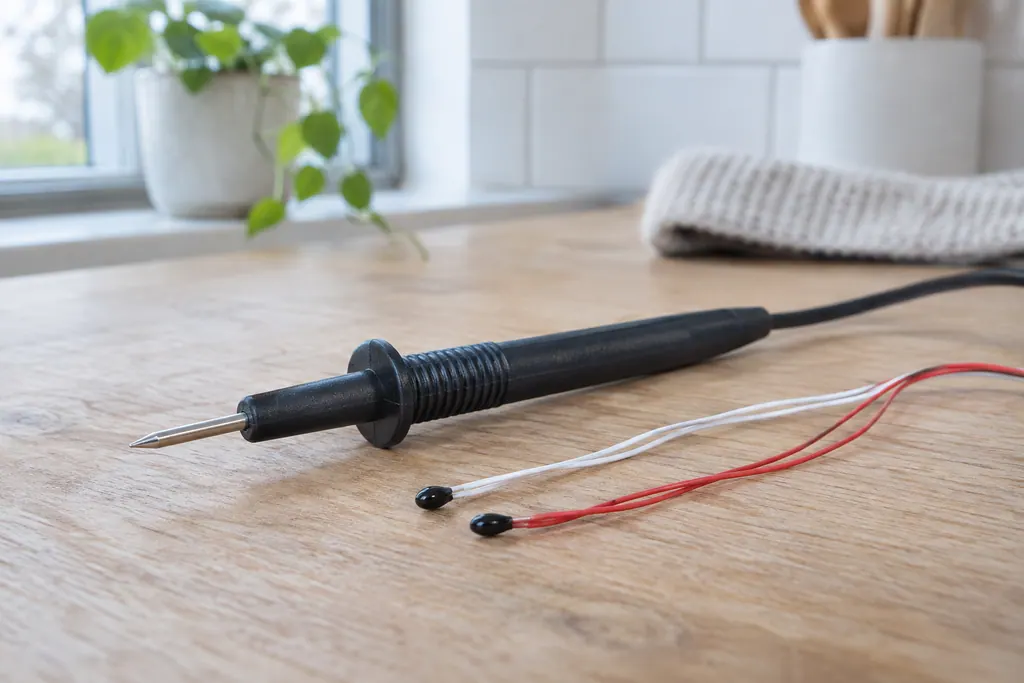
Dryer control thermistor
Control thermistors are the temperature sensors that tell the dryer how hot the air is. Electrolux’s sheet names an outlet, an inlet and an exhaust thermistor. E71 to E74 mean an open or shorted sensor circuit, and EF1 and EF3 list them among the causes.
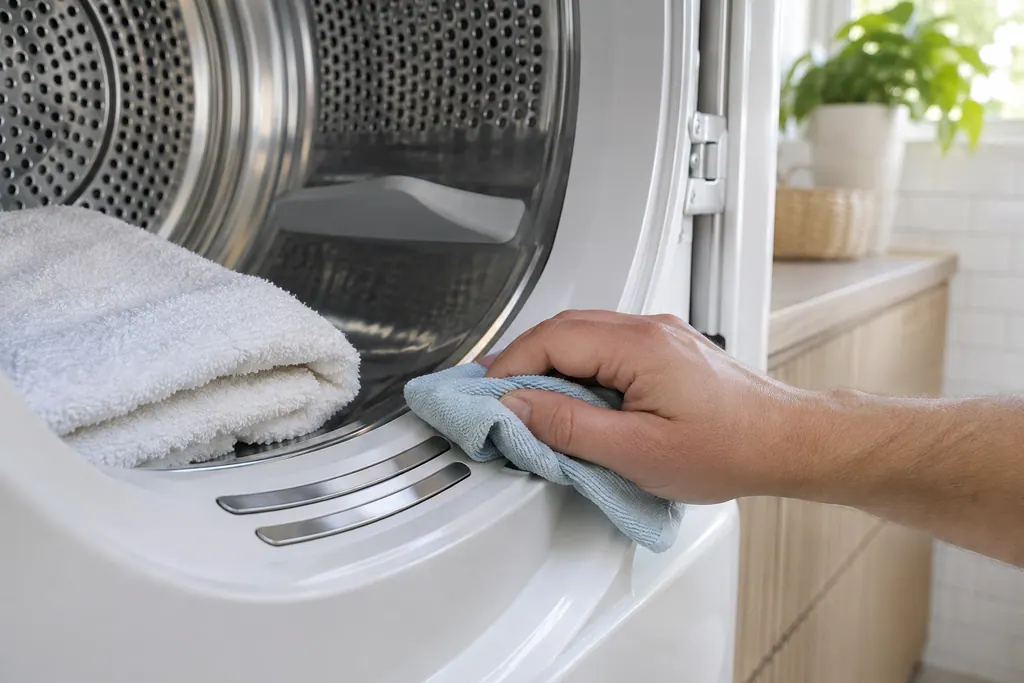
Dryer contact sensor
The contact sensor reads how damp the load is. Electrolux’s dryer sheet labels its test row “MOIST. BARS” and ties E31 and E32 to a frequency reading that is too high or too low. A foreign object touching the sensor is one listed cause.
If the display adds a code.
No code is tied directly to this topic.
No further researched dishwasher code is tied to this topic. Match the exact message to your model manual and do not swap in another code from the library.
See the research statusRead the related care guide.
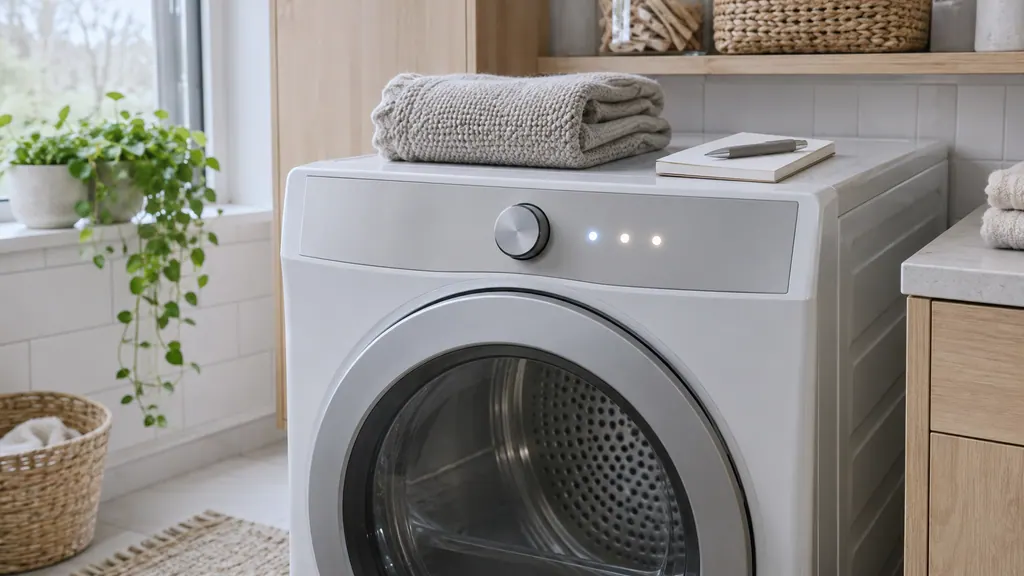
A code on the dryer? Recall it, then read its group.
To see the last code on an Electrolux dryer, wake it with any button except cancel, then hold cancel and start/pause for 6 seconds. Codes sort by their first digit into contact sensor, motor, heat, thermistor, board, supply and airflow groups, and most groups need a technician.
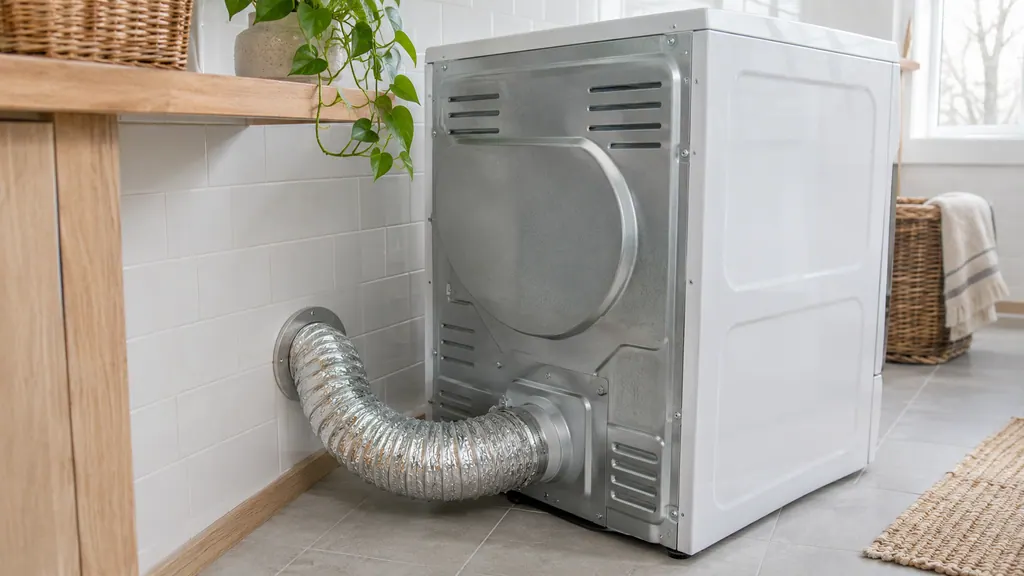
E61, E64, E65 or E66? Each one tests something different.
On an Electrolux dryer, E61 is the heater relay, E63 a heater short to ground, E64 an open heater circuit, E65 a high-limit thermostat that tripped too often and E66 an open thermal limiter. Only E65 sends the technician to the vent, and every one of them needs a visit.
When observation becomes a service request.
Leave internal testing to a technician.
If the noise continues on an empty run after you removed loose objects, checked the shipping bolts and leveled the dryer, book a visit. Tell us what the sound is like and when it happens.
Arrange a diagnosticSources and model boundaries.
These sources back the Electrolux dryer noisy, rattling or shaking guidance. Use the manual for your own model.
- Laundry Dryer Noises (KB 1841859)
Follow the guide for your exact model. Consult how we research these pages.
Is the chime at the end of the cycle a problem?
No. Electrolux treats the end-of-cycle chime as normal. It can sound occasionally during Wrinkle Release too, if you picked that option.
How can I tell if the noise is my dryer or my laundry?
Run it with nothing inside. If the noise is gone, something in the load made it, often a coin or a buckle. If it persists, the dryer itself is making it.
Why does a newly installed dryer shake or walk?
Two things to rule out: a shipping bolt left in place, and a dryer that is not level. Electrolux names both for vibration on a new unit.
Does squeaking mean the dryer is failing?
Not necessarily. Electrolux usually links clanking or squeaking to a loose pedestal. Check that first, and book a visit if the sound continues.
Codes, symptoms, parts and service
Link the message to what to do next.
Electrolux dryer noisy, rattling or shaking
Most dryer noise has a simple source: coins or buckles in the drum, a loose pedestal, shipping bolts still in place or a dryer that is out of level. Electrolux also lists sounds that are normal, such as the chime at the end of a cycle.
Dryer repair
Book a diagnostic for your model at the appliance.
Find your metro
Office details and the access information to pass on.