Start from the symptom
Electrolux refrigerator or freezer frost buildup.
Frost forms when warm and cold air meet below freezing. Electrolux traces it to a gasket or door that cannot seal, a chute flap left ajar, a freezer set colder than 0 degrees F or food blocking the vents.
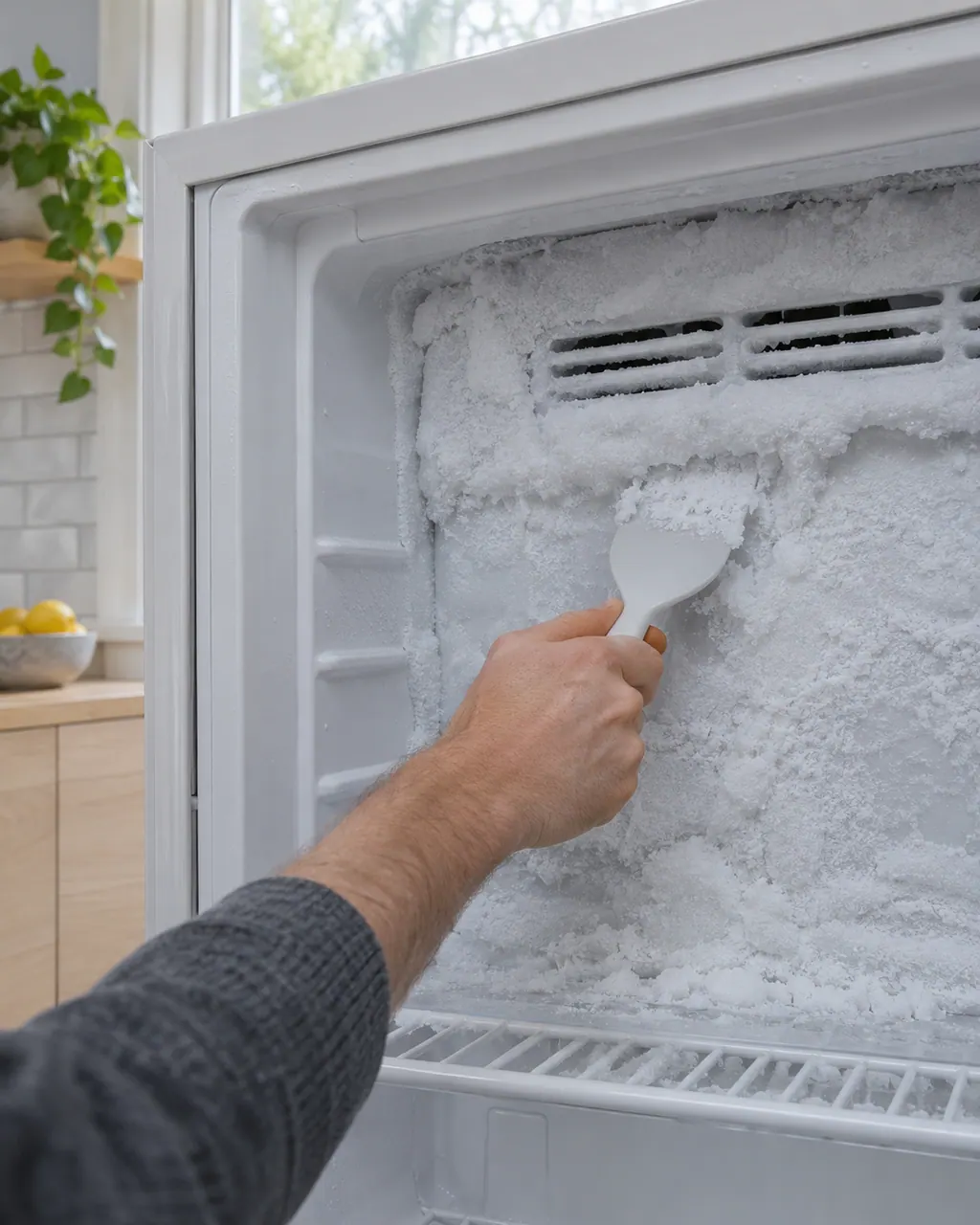
Start with safe observations.
Power the appliance down and pull the plug before any owner check. Beware of standing water and sharp debris. Never touch a wet plug or electrical area, take off service panels, or step beyond your model’s owner guide.
- 1
Close the door all the way
Make sure the door shuts completely and nothing, such as a package, holds it open.
- 2
Inspect the gasket
A warped door gasket, or a warped door itself, prevents a proper seal and lets humid air in. Run your hand around the gasket and look for gaps.
- 3
Check the ice chute
If the chute flap does not close, ice may be stuck in it. Clear it so the flap can shut.
- 4
Review the temperature
A freezer set below the advised 0 F can over-freeze food and breed frost; the fresh food side is advised at 37 F.
- 5
Keep vents clear
Items that cover the air passages, or sit right where cold air blows, pick up frost. Move them clear of the vents.
- 6
Not defrosting
Electrolux's frost article does not describe a defrost system or its parts, so this page stops at the owner checks. Frost that returns after these checks calls for a technician.
Systems a technician may investigate.
The parts below tie in with this symptom. Seeing it does not prove any one of them has failed.
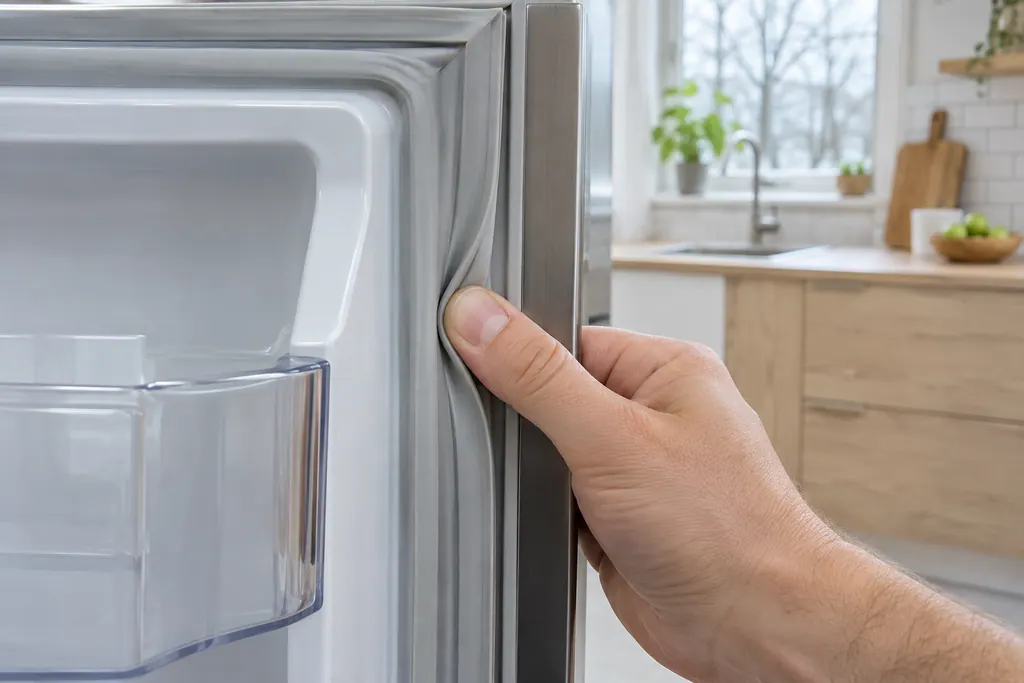
Refrigerator and freezer door gasket
The door gasket is the seal around the doors. Electrolux puts a bent gasket or door at the top of its frost causes, and a leaky seal among the reasons for the H or HI high temperature alarm. Both articles send you to check the seal before anything else.
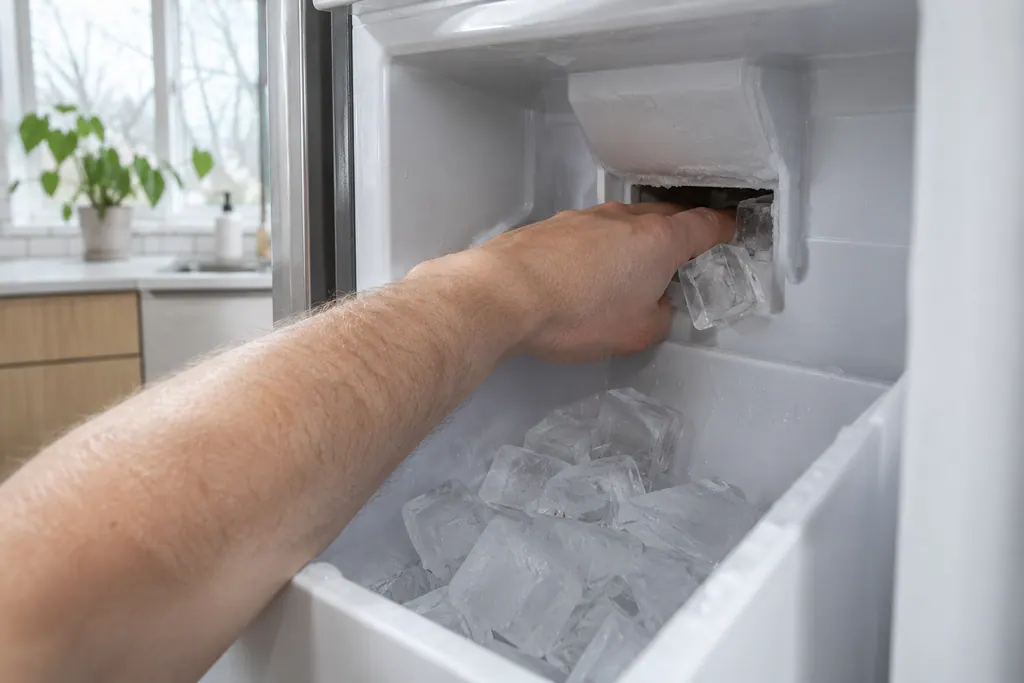
Ice chute and auger
The ice chute carries cubes from the bin to the dispenser in the door, and the auger in the bin pushes them forward. Electrolux’s DI SP alarm means a cube has sat in the chute too long. A second article covers ice that has melted and refrozen around the auger motor shaft.
If the display adds a code.
Keep the exact message.
We have not researched the code meanings for this appliance. Turn to its model manual and attach a photo of the display to your request.
See the research statusRead the related care guide.
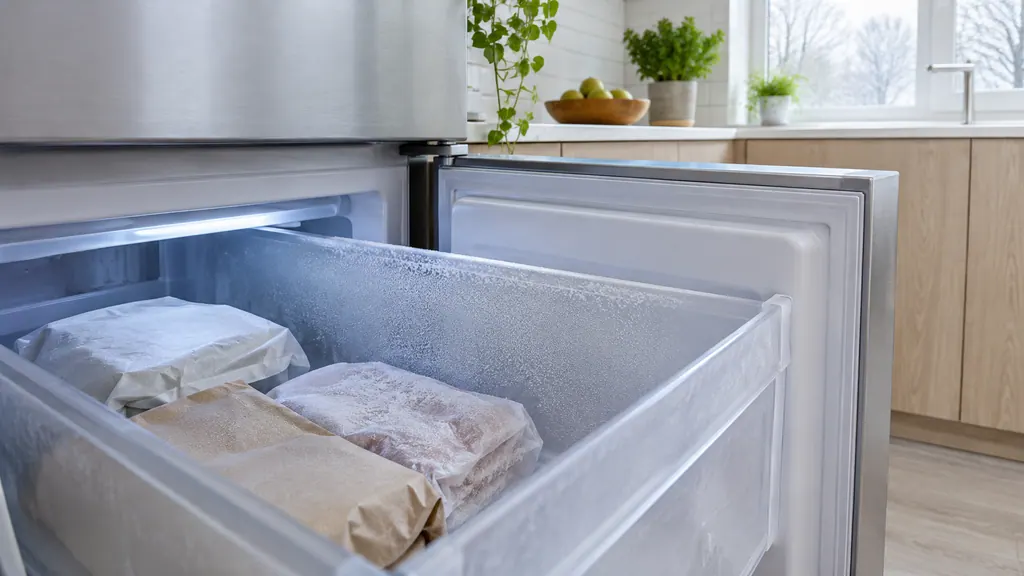
Frost in the freezer? Four things to check.
Electrolux describes frost as condensation that freezes where warm air meets air below 32 °F. Check four things: the door and gasket seal, the chute flap, a freezer setting that has drifted below zero, and food sitting across the vents. Book if frost returns.
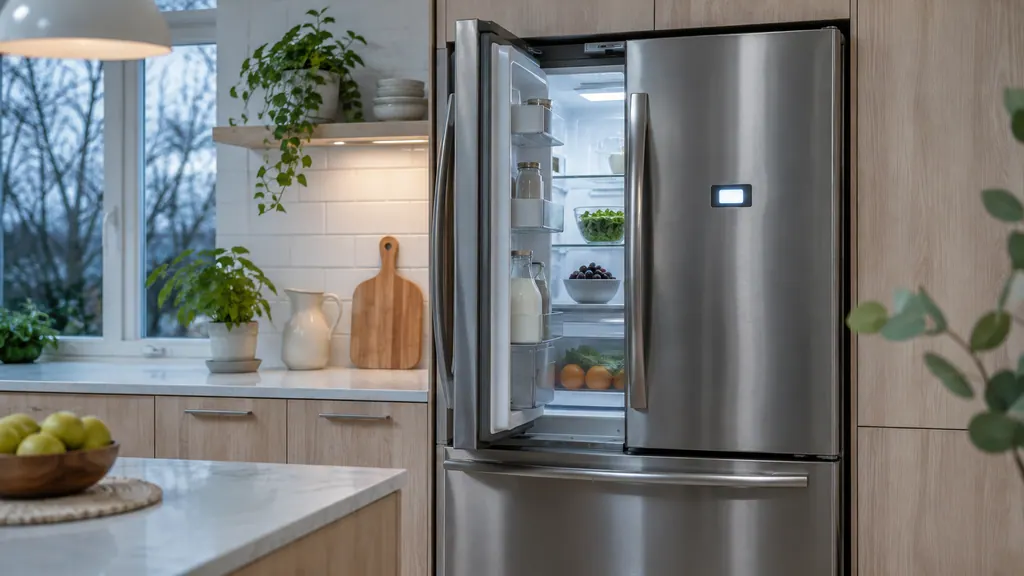
High Temp on the fridge display? Start with the door and the gasket.
Most Electrolux refrigerator alarms are prompts: PF after a power cut, High Temp when a section passes 26 degrees (freezer) or 55 degrees (fridge), Door Ajar after 5 minutes open, Sb for Sabbath mode and DI SP for an ice jam. OP, SH, SY CE, SY CF and SY EF have no printed meaning.
When observation becomes a service request.
Leave internal testing to a technician.
Book a visit if frost keeps returning after the door seals, the chute closes, the temperature is at its recommended settings and the vents are clear. Mention where the frost forms and whether it follows door openings.
Arrange a diagnosticSources and model boundaries.
These sources back the Electrolux refrigerator or freezer frost buildup guidance. Use the manual for your own model.
- Refrigerators / Freezer - Frost Build Up (KB 1918348)
- Refrigerator Error Code H or HI - High Temperature (KB 1917064)
Follow the guide for your exact model. Consult how we research these pages.
What causes frost in an Electrolux freezer?
Warm air meeting cold air below freezing. Electrolux lists a poor door seal, a chute flap left ajar, very low settings and blocked airflow.
What are the recommended temperature settings?
For a unit in a kitchen, Electrolux advises 37 F in the fresh food section and 0 F in the freezer.
Can food placement cause frost?
Yes. Food that covers the air passages, or sits where cold air blows straight on it, gathers frost. Keep it clear of the vents.
Does frost mean the refrigerator needs a repair?
Not always. Start with the door, gasket, chute and settings. If the frost keeps coming back, book a visit so we can check what is causing it.
Codes, symptoms, parts and service
Link the message to what to do next.
Electrolux refrigerator ice maker not working
Little or no ice often comes down to a jam, ice frozen around the auger, a locked display or a water supply problem. Electrolux has a short auger procedure, a DI SP ice-jam article and a no-water checklist that also covers the ice maker.
Ice chute and auger
The ice chute carries cubes from the bin to the dispenser in the door, and the auger in the bin pushes them forward. Electrolux’s DI SP alarm means a cube has sat in the chute too long. A second article covers ice that has melted and refrozen around the auger motor shaft.
Refrigerator repair
Book a diagnostic for your model at the appliance.
Find your metro
Office details and the access information to pass on.